A new podcast from Radio Ambulante spotlights the trans-latina community in Queens.

All photos courtesy of Radio Ambulande Studios.
By Karina Hurtado-Ocampo
Las Reinas de Queens is a much-needed retelling of the NYC Latinx migration story, told through the stories of trans Latine house mothers and sex workers. In true Queens fashion, the ten-episode podcast starts hyperlocal with Roosevelt Avenue as its runway, and ends on the international stage, reframing what family, sanctuary, and being a queen mean within working-class Latinidad in Queens and beyond. Narrated entirely in Spanish, it is hosted by trans Latina creative powerhouse Rula Ávila Muñoz and produced by Radio Ambulante Studios and iHeart Radio. The series moves through decades of gut-turning and rapturous Black, Brown, and queer NYC history, playing with classic staples of Latino entertainment: the Catholic church (its saints and martyrs), weeping mothers, and glamorous beauty queens.
The first episode begins at a vigil for Alexa Negrón Luciano, a trans woman killed in Puerto Rico in February 2020. As trans activists connect her murder to transphobia across Latin America , the producers' choice matters: they take on transfeminicide by opening with an organized response, spotlighting trans power rather than fear.
A Mother’s Legacy, a City’s Failure
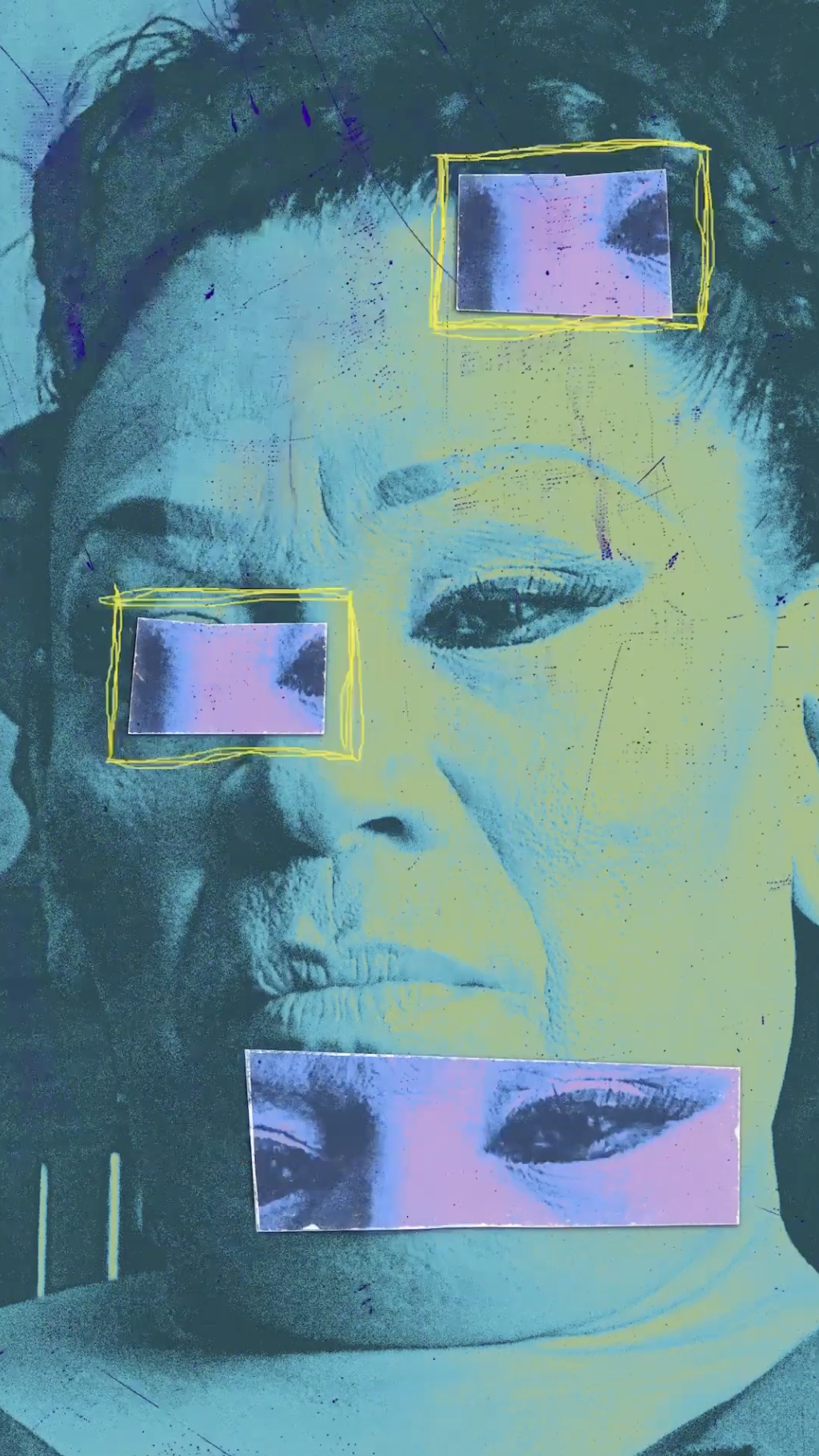
Here we also meet Lorena Borjas, a Mexican-born organizer and mother figure to Queens' Latinx trans community. Like every woman presented in the series, Borjas is not a saint to be co-opted or sanitized by corporate queer history. Despite a background in accounting, she was repeatedly barred from formal employment for being trans eventually turning to sex work to survive, contracting HIV, enduring addiction and sex trafficking. But Lorena was as fierce as the cards she was dealt, and the podcast uplifts her now famous proverb to "luchar como una perra." After her HIV diagnosis, at a time when carrying three condoms could get you arrested for prostitution, she began street outreach to young trans sex workers, handing out condoms. She went on to co-found a trans bail fund with lawyer Chaise Strangio, establish Colectivo Intercultural Transgrediendo (the first trans organization in Queens), and increased access to HIV testing clinics and hormone therapy. The list goes on.
COVID-19 took Lorena Borjas in March 2020, but not before she and Liaam Winslet, her sister and comrade, started a mutual aid fund for trans community members hit by the pandemic. Winslet recalls Borjas, bound to a hospital bed, still urgently calling for the coordination of groceries and money her pajaras, what she called her trans sisters and daughters, needed to survive. Winslet carries Lorena’s legacy forward through continued service, but is candid about the psychological weight of repeatedly carrying so much of the trauma trans women face. When the city later renamed 83rd street & Baxter Ave to “Lorena Borjas Way”, Cecilia Gentili, another trans icon and the Santa Puta, asked what good a street sign does when the city refuses to uphold the values Borjas lived by: caring for trans sex workers.
Here, Reinas widens our definition of transfeminicide to implicate the state. This is evident across interviews, through recurring accounts of police abuse, a lack of resources dedicated to increasing awareness among new migrant communities about their rights, and the enforcement of anti-discrimination laws, which results in the exclusion of immigrant trans women from the formal job market, driving them into sex work.
Chosen Family, Chosen Queens
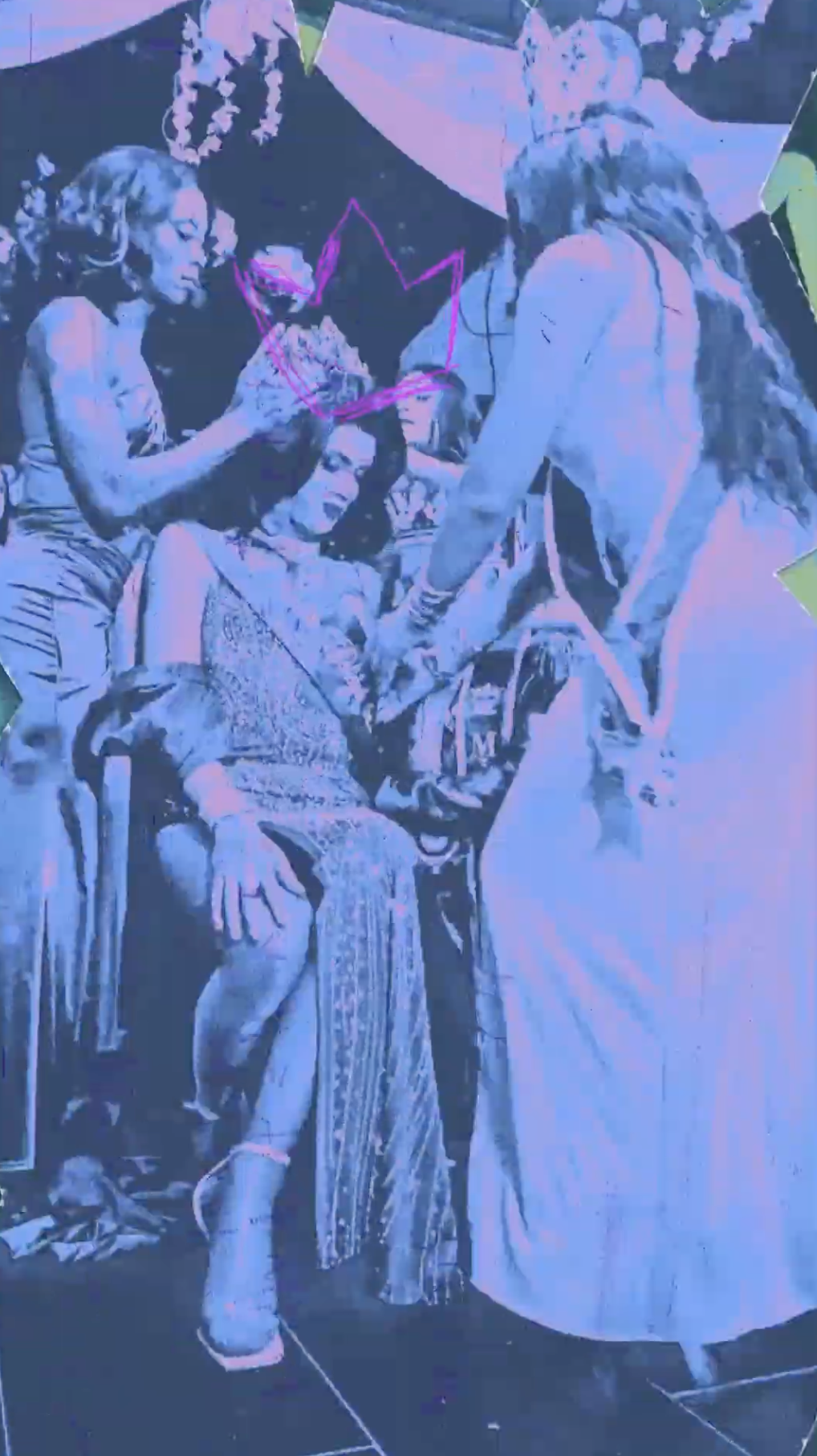
Who will take care of us now that Lorena is gone? The rest of Reinas evolves around that question, leaving a trail of archives on poor and working-class trans warrior mothers, queens, and executive directors who have made survival possible by connecting incoming trans migrants to the culture, history, and organizations they need to thrive. Among these women are: Cristina Herrera, Jessica Guaman, Liaam Winslet, Katia Perea, Ceyenne Doroshow, LaLa Zannell, Laura Martínez, Melissa Núñez, Keyly Rosemberg, Jesica Lafontaine, and Lorena San Cartier. The face and entry point for many new arrivals, these leaders are surrounded by networks of chosen family. Chosen family orients you in a new city, helps you transition, and nurtures the queen inside you when the rest of society closes its doors. Chosen families also compete against each other in ballroom, drag performances, and beauty pageants, and these same networks are what trans organizers tap to educate, agitate, and organize.
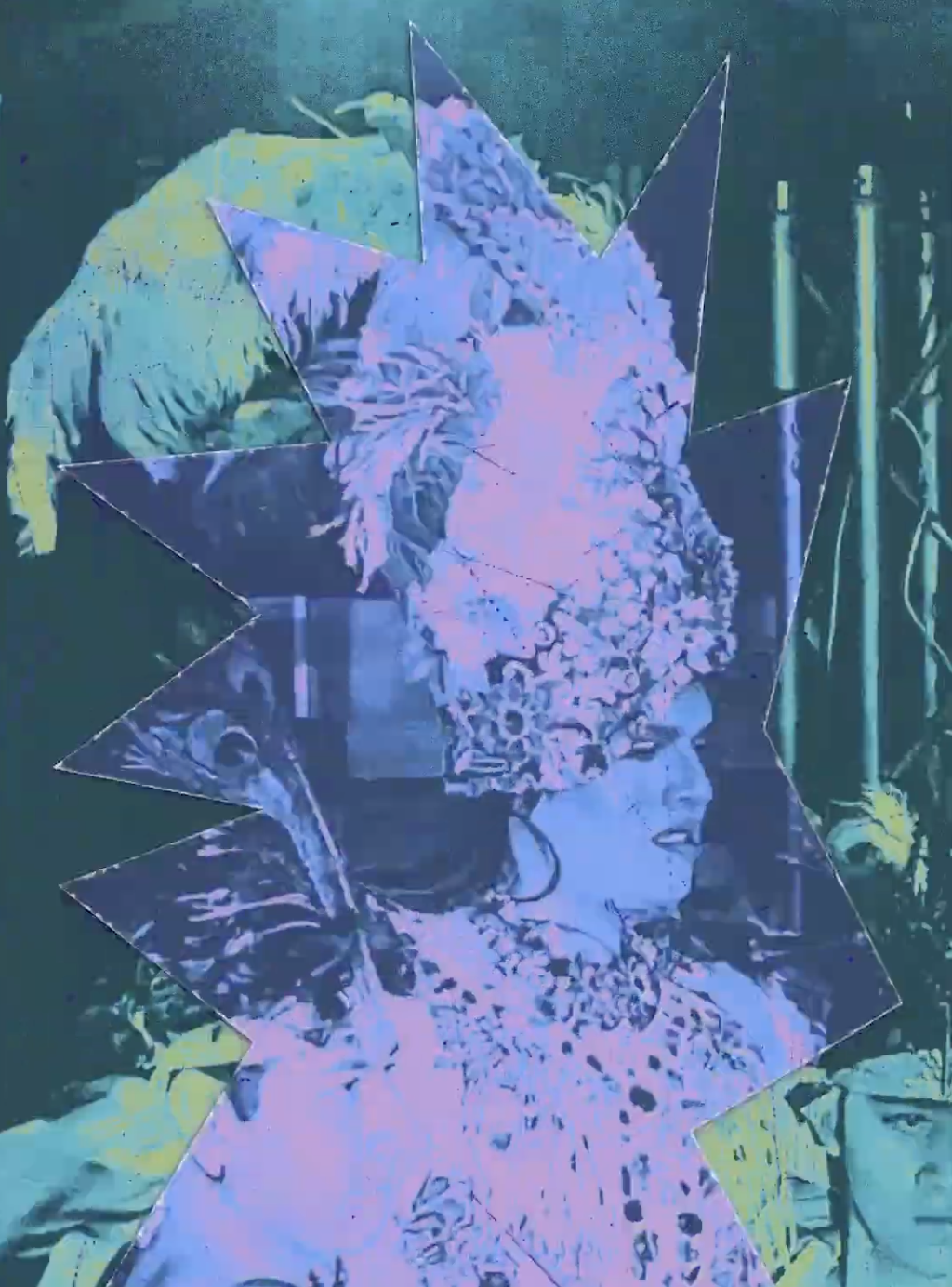
Throughout the series we’re captured by the moments we can feel the lights bouncing off disco balls, picturing a transformista perfectly mouthing the words to her song of choice. The nightclubs in Reinas harbor guardians of memory like Puerto Rican transformista Ivan the Terrible, high-quality performance artists like Lady Katiria and Lorena San Cartier, who Rula describes as “not only garnering applause”, but the respect of her audience and community. Among the nightclubs featured was La Escuelita, a ‘90s hub for Latinx queers that initially started in a Hell’s Kitchen basement and hosted free Sunday dinners for trans community members. Everything from transformistas being paid fairly, to the messages club goers would scribble on the old chalkboard that hung in the dancehall, to the groundbreaking public access television show that sometimes covered the pageants – HoMoVISIONES — is reminiscent of an NYC that gentrification has tried hard to displace. Reinas recalls an ambiance so memorable, the strict feminine standards enforced by its historic Trans Queens inspired Pedro Almodovar’s drag performance of La Lupe’s “Puro Teatro” in his 1988 film Women on the Verge of a Nervous Breakdown.
Reinas places you inside each scene, through masterful sound design: the protest chants at a vigil, the layered chatter of a Roosevelt Avenue street interview, the thump of a dancehall. The music, ambient sounds, and archival audio never feel like just texture. They carry you from a Latin American living room to a Hell’s Kitchen basement to a Jackson Heights pageant stage.
Tension, Solidarity, and the Fight Over Sex Work
In a creative decision that both avoids flattening its subjects and leans into the dramatic contradictions of being in a relationship, Reinas airs the tensions trans immigrant women face within the various communities they are a part of. At La Escuelita, that looked like the owner cutting costs towards the club’s final days by swapping talented transformistas for younger, less experienced drag performers willing to be paid in exposure. Within NYC’s broader queer community, built on the legacy of Stonewall and the fight to survive HIV/AIDS amid government neglect, New York's LGBTQ institutions (health centers, nonprofits, nightclubs) have served as political spaces where the trans community has been able to agitate. Resulting in increased access to life-saving services and employment, but not without a fight.
And while cross-Latinx magic abounds in the series, from the founding of La Escuelita, to the Nuestra Belleza Latina Trans pageant where a contestant’s performance is inspired by her Shipibo roots, the women also recall how cis Puerto Rican sex workers with American citizenship, would call immigration on many of the trans immigrant women to reduce competition. Still, today, in enforcement initiatives, largely Latinx faces can be seen holding signs to “save our children” from sex workers, despite no record of sex workers posing harm to local children.
“In this day and age, why can't these women just do other work?” A concerned cis Latina is heard asking during a street interview captured on the podcast. The organizers that Reinas spotlights are clear: apart from the structural barriers that have long kept trans women out of the formal job market, there is no shame in sex work. At this point, the series once again rejects the savior narrative by showing how trans sex workers along the 7 line have organized themselves, ranging on issues from shielding each other from undercover cops to agreeing on a standard rate for clients. Organizations like Colectivo Intercultural Transgrediendo, founded by Borjas, further creates space for trans women to share strategies for protecting themselves, bridging the gap between rights and reality. Despite a significant decrease in funding since the rise of the second Trump administration, and maybe even more so now, trans-led organizations remain critical to build community, fighting as a unified front and as part of a broader movement for so
Las Reinas & The State
That fight runs directly into the city's enforcement. An entire episode of Reinas is devoted to Operation Restore Roosevelt, the multi-agency initiative launched under Eric Adams in October 2024, and its loudest booster, former council member Hiram Monserrate, who was convicted of assault in a domestic violence case and later pleaded guilty to fraud. The operation brands sex workers as victims while using that same logic to justify throwing the criminal legal system at them. "Behind these women, there is organized crime," Monserrate is heard preaching on the podcast. Colectivo Intercultural Transgrediendo, which surveyed its members, many of them sex workers, rebuts him with street-generated data: "girls are in the streets working because they need to work, not because of organized crime."
Meanwhile, advocates like Decrim NY are pushing to pass Cecilia's Act For Rights in Sex Trade. Named after sex worker and Trans mother Cecilia Gentili, the bill would decriminalize sex work statewide. While the Mamdani administration cannot decriminalize it citywide, advocates note he can end policies like Operation Restore Roosevelt and make good on promises to follow the Brooklyn and Manhattan district attorneys in minimizing arrests of sex workers. The City Council's Protect Trans Futures package, passed April 24, 2025, helps on paper: it requires the Mayor's Office of Immigrant Affairs to assess service gaps for TGNCNBI migrants and make a plan to close them.
The stakes of that plan are clearest in the penultimate episode, set at Nuestra Belleza Latina Trans in Jackson Heights. Laura Martínez revived the pageant after eleven years, but only four contestants entered because of an increase in ICE raids. On the podcast, organizers from Make the Road report that many of their trans members have preferred to self-deport rather than risk being targeted, detained, and tortured by ICE. This is especially concerning given the difficulty of finding quality, life-saving medication, which many of their members require. Meanwhile, legal advocates utilize habeas corpus petitions to keep cases within local courts and prevent ICE detainees from being transferred to remote facilities in other states.
The final episode of Reinas widens the lens to trans organizers in Mexico, Colombia, and Germany, giving us a glimpse of initiatives spanning from rural Latin America to the art world, and perhaps a future series for Reinas host, Rula in partnership with Radio Ambulante.
Ultimately, Las Reinas de Queens returns to its opening question: "Who will take care of us now?" Lorena’s life and legacy harbor the answer – we take care of each other. Sanctuary isn't something the city or the broader Latinx community has granted trans Latinx women and sex workers. It is what they have built. And it needs to be expanded with their leadership at the center.
If there is a downside, and that’s a generous use of the word, it’s that the series is heavy. The lives at its center are marked by violence, criminalization, illness, and loss, and the stories don’t look away. But the producers handle that weight with real care. Humor, glamour, music, and joy sit beside the grief, and so do moments of organizing and chosen family. The result is a series that never lets you forget the stakes but doesn’t leave you drowning in them.
Karina Hurtado-Ocampo is a filmmaker and (screen)writer who accompanies communities by way of making movies. A 90s, Queer, Queens kid from the Colombian corner of the spacetime continuum, they travel sharing stories of hand-made lives; of working people moving our collective plot toward soulful satiety. Kari is the co-editor of the anthology “Latinas: Gender, Race & Class Vol. 2” published with Red Sugarcane Press and co-director of the short film “Resisting Fort Apache the Bronx.” karinahurtado-ocampo.com