
A new installation in Socrates Sculpture Park takes on the question of Puerto Rican migration from the perspectives of two classic, 20th century works of literature.

Photo courtesy of the artist.
By Néstor David Pastor López
Now on view at Socrates Sculpture Park in Astoria, La Carreta Made a U-Turn (2026, wood & steel) is a new sculpture by Sunnyside-based artist Josué Guarionex that takes its form — a full scale model of a U-shaped oxcart — from two classic 20th century works of Puerto Rican literature.
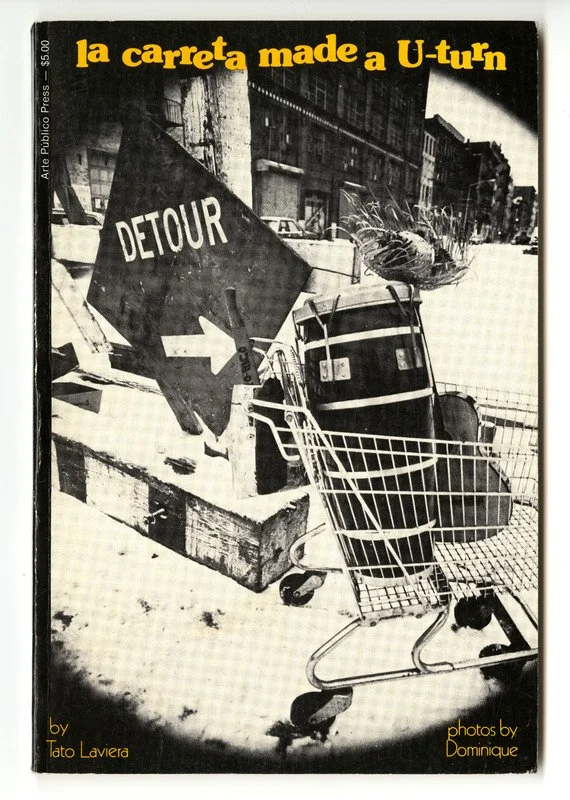
The first is the seminal three-act play La Carreta by René Marqués, which originally premiered in 1953; the other is La Carreta Made a U-Turn, the debut collection of poems by Jesús “Tato” Laviera published in 1979. The title of the latter is a satirical response to the former, in which a family of jíbaros abandon the mountainous countryside to settle in the capital of San Juan, and later, New York City. Tragedy follows until the family is forced to return to Puerto Rico.
The plot is essentially a worst case scenario for Puerto Rican migrants, adapted for the stage as a cautionary tale at a time when thousands were leaving the archipelago each year, or else considering it. Guarionex shares Marqués’ concern, particularly as someone whose own migration story is reflected in the play — from the municipality of Morovis to San Juan to New York.
But his view is not overtly paternalistic, nor moralistic. It is more so rooted in the context of anti-imperialism, which also informed Marqués’ writing. Here, the oxcart is an antiquated symbol of modern displacement, but it can also represent an ancient technology that first provided humans with the ability to transit longer distances, expand trade routes, and ultimately, establish more connection.
In either case, it is a question of why. Why leave home in the first place? And in the case of Puerto Rico, why leave home if home is paradise? Migration is almost paradoxical in this sense, as Guarionex suggested in an interview with El Nuevo Día. And yet Puerto Rico has already experienced a second exodus this century, as migration surges globally.
La Carreta actually first premiered in Manhattan, where I suppose audiences could see their “miserable” lives reflected back at them before deciding whether to stay or make a proverbial U-turn. The Nuyorican generation rejected this premise of abject suffering and depravity. Before Laviera’s seminal debut, it was fellow Nuyorican poet Pedro Pietri, with his epic poem “Puerto Rican Obituary,” who gave dignity to the sacrifice of the thousands of Puerto Rican migrants striving for a better life — simply by naming them and their plight.
Eventually, Puerto Ricans did reconsider life on the mainland. The year La Carreta premiered was the peak of the Puerto Rican Great Migration. But by 1979, net migration was negative. In other words, more Puerto Ricans were moving back home than leaving. Marqués, however, mainly focuses on the undeniably harsh conditions that migrants faced, eschewing the resilience of Puerto Ricans to adapt and survive in a new environment.
The cover photo for La Carreta Made a U-Turn plays on the myopia of Marqués’ social critique. Laviera’s oxcart is a shopping cart filled with symbols of Puerto Rican culture—a drum, a cuatro, the national string instrument of Puerto Rico, and a pava, the iconic straw hat worn by jibaros — set against an urban setting of rowhouses and a small construction site. A sign playfully reads detour, perhaps in reference to the diaspora: always a work in progress.
La Carreta Made a U-Turn was the first book published by Arte Público Press, the oldest independent publisher of Latino literature in the United States. In the foreword, the publisher, Nicolas Kanellos, wrote that the book constituted a fourth act for Marqués’ play. That would make Guarionex’s sculpture the fifth; accordingly, a three-dimensional synthesis of these two perspectives on the Puerto Rican migrant condition and the transient reality that all migrants experience.
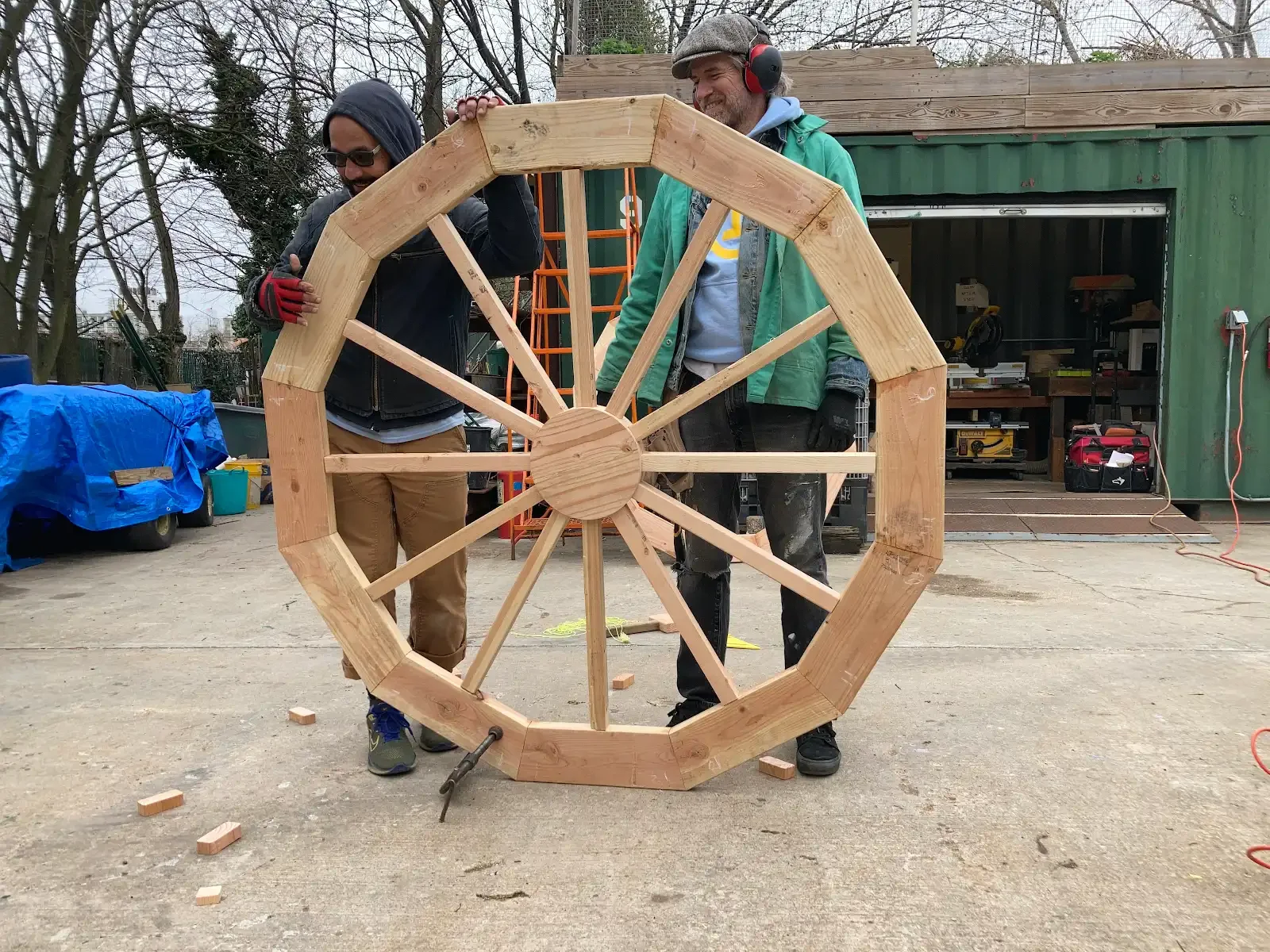
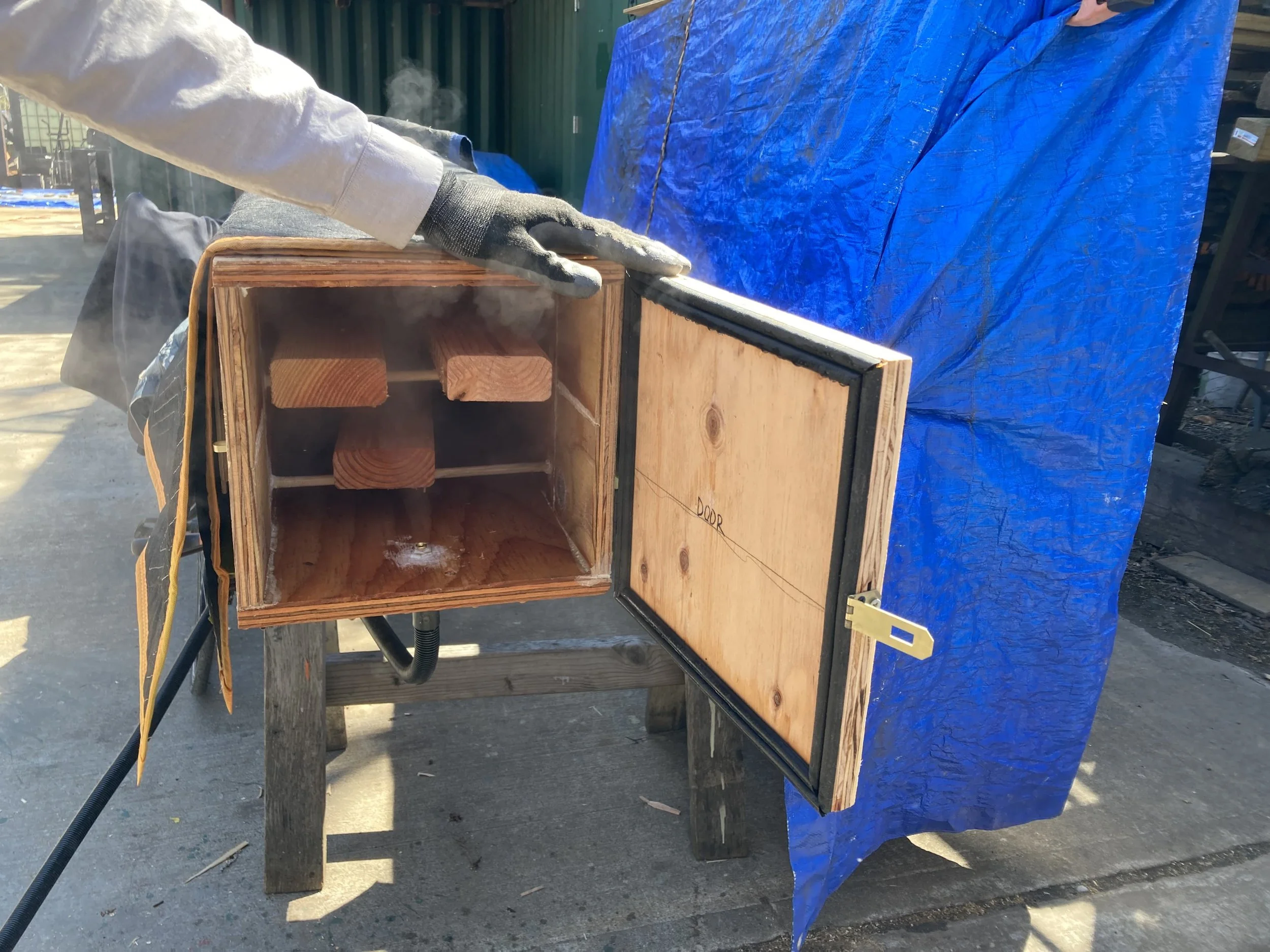
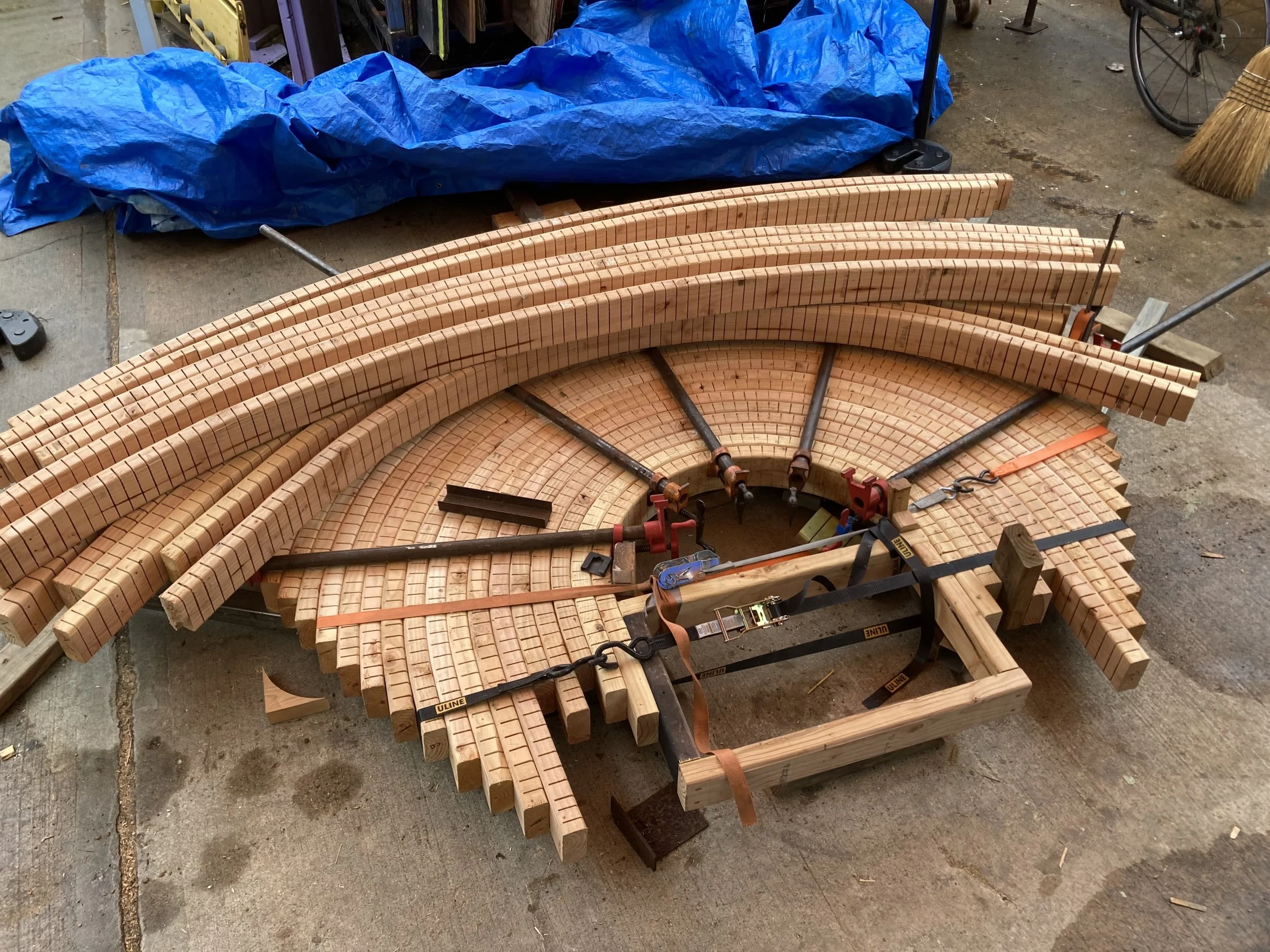
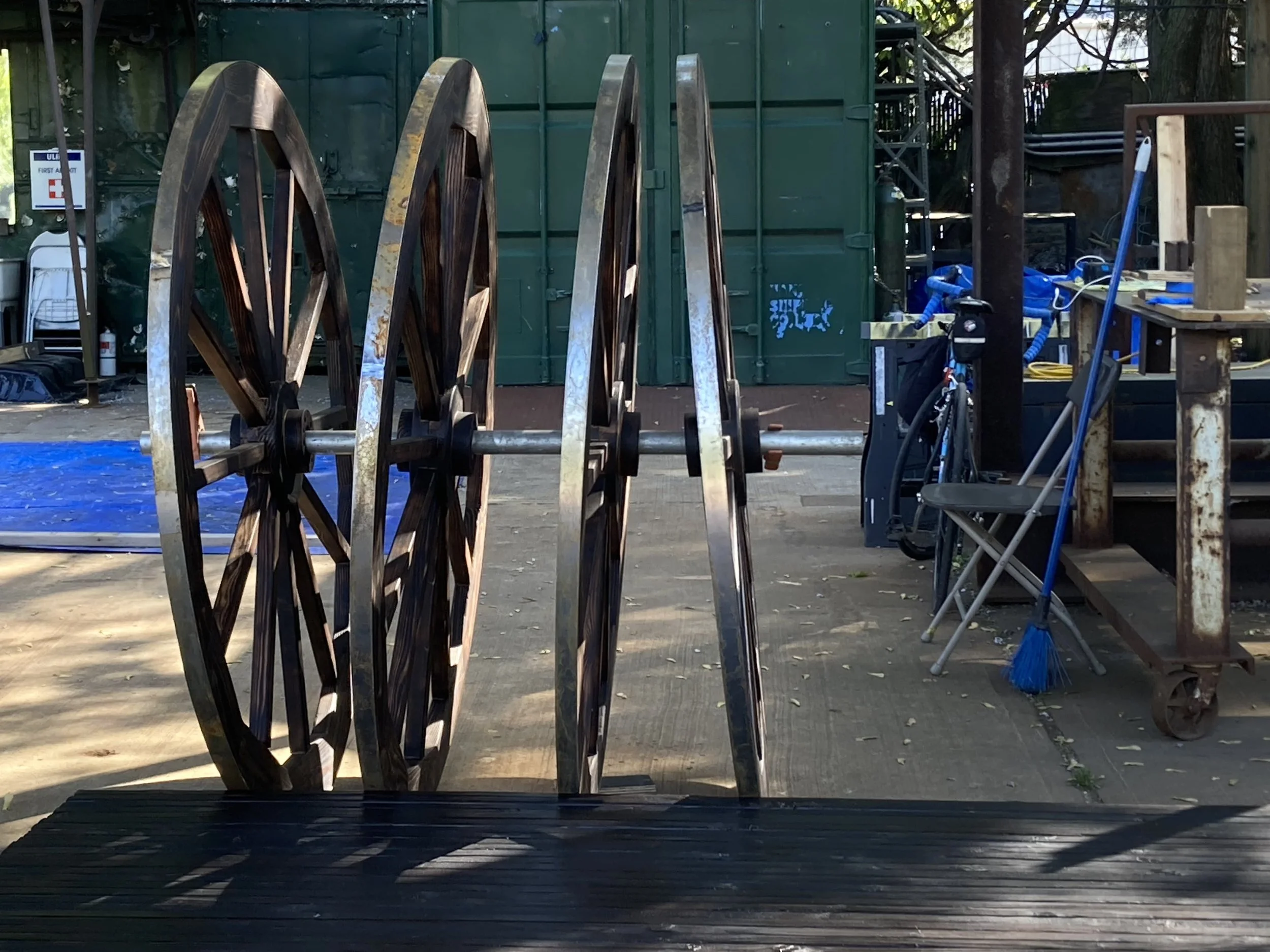
“La migración duele,” says Guarionex. “Migration is painful.” It requires you to be resilient, to bend but not to break. This is reflected in the technique used to bend the long wooden beams of the oxcart into a U-shape. The artist constructed a steam box in order to make the wood temporarily pliable. Upon removing each 2’ x 4’ beam, 150 in total, he had only moments to refine the curvature or risk wasting the wood — a labor intensive process that took approximately two months, with assistance from artist Richard Webb. The steam itself can be seen as both a tool and concept. Ultimately, steam creates pressure in a way that propels the work, much like the hardships that await migrants.
The result, in the case of La Carreta Made a U-Turn, is part of a larger motif in which flawed, yet functional objects derive from a colonial logic. The oxcart is a relic in this sense, vestigial. Hence, the unfinished construction without overcarriage, nor clear orientation for front and back.
It is, like all migration stories, a work-in-progress, a massive modular structure, measuring 14 feet wide and 14 feet long and weighing 1,600 lbs.
Originally conceived as a stage, Guarionex was able to convey his concept for the oxcart sculpture to Laviera, who was also a playwright, before his passing in 2013. Fittingly, poet and executive director of the Nuyorican Poets Cafe Caridad de la Luz, also known as La Bruja, performed several poems from Laviera’s book on the day of the opening, this past June. More activations will be planned for the sculpture, which will be on view until the spring of 2028.
—
La Carreta Made a U-Turn will be on view at Socrates Sculpture Park (32-01 Vernon Blvd, Astoria, NY 11106) through April 9, 2028 as part of the 2026–2028 artist fellowship cohort.
This anniversary exhibition commemorates the 30th year of the fellowship program and the 40th year of the park. The park is free and open to the public every day.
Néstor David Pastor López is a writer, editor, and musician from Queens, NY. He is the founder and publisher of La Feria. His portfolio: www.ticona.nyc